It started with a customer stranded at the airport, cards failing, unable to reach the bank. The help he needed existed, it was just buried four clicks deep. I redesigned Mashreq's customer-care experience so urgent help is the first thing you find, not the last.
Sr. UX / UI Designer — website squad
12 people — product, architect, Azure dev, dev lead, frontend, agile coach, me on design
Dec 2022 – Mar 2023 · Mashreq Bank, Dubai
Figma · Google Analytics · mailbox analytics
Redesigned Mashreq's self-service and customer-care experience across web and mobile — analytics, research, IA, self-service flows, UI, and a component library.
35% fewer support calls in the first quarter, customer care surfaced from 4+ clicks to 1, and 42% less design-to-development time.
Urgent, high-stakes moments where retail and corporate customers in distress have low patience.
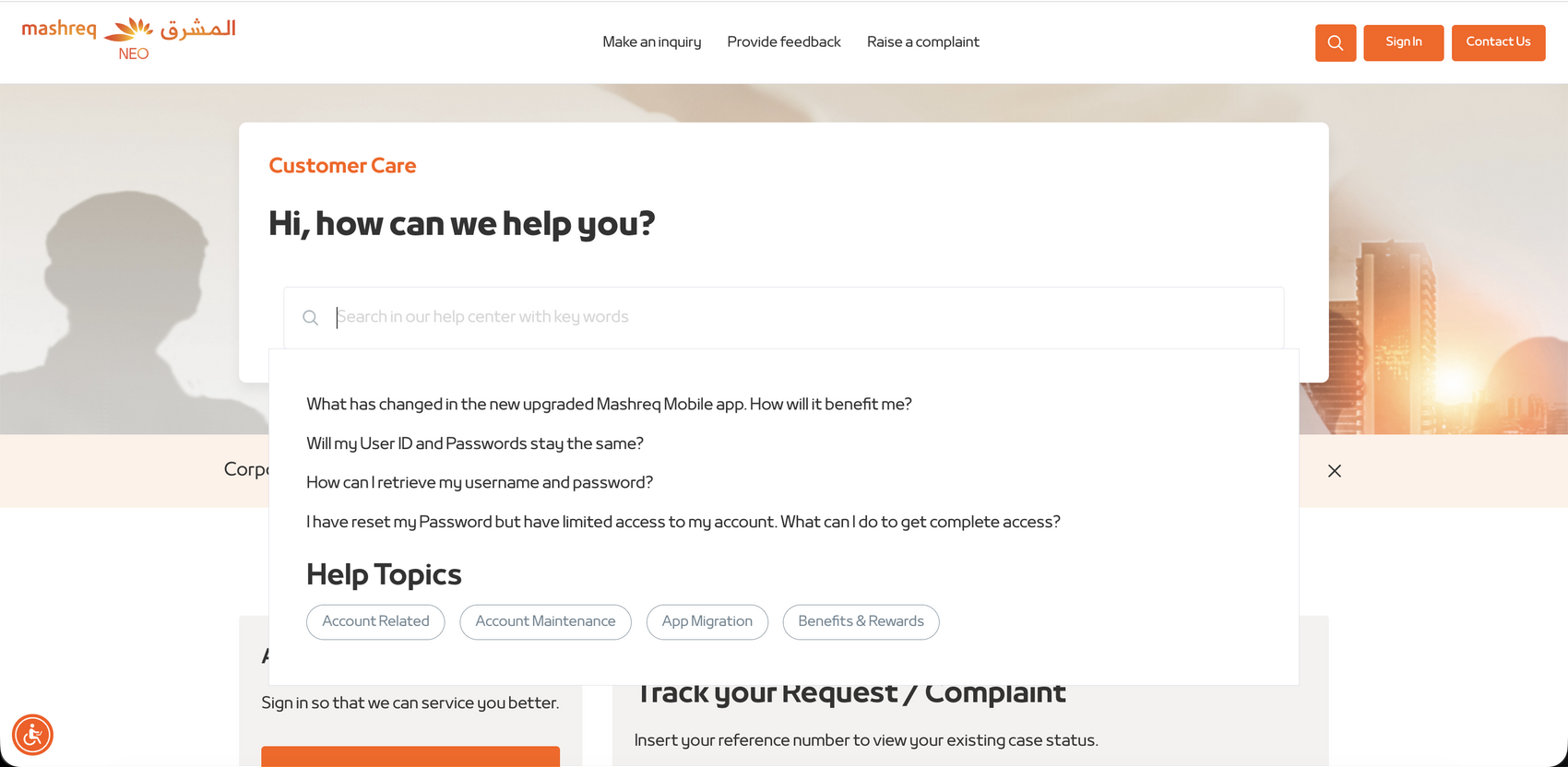
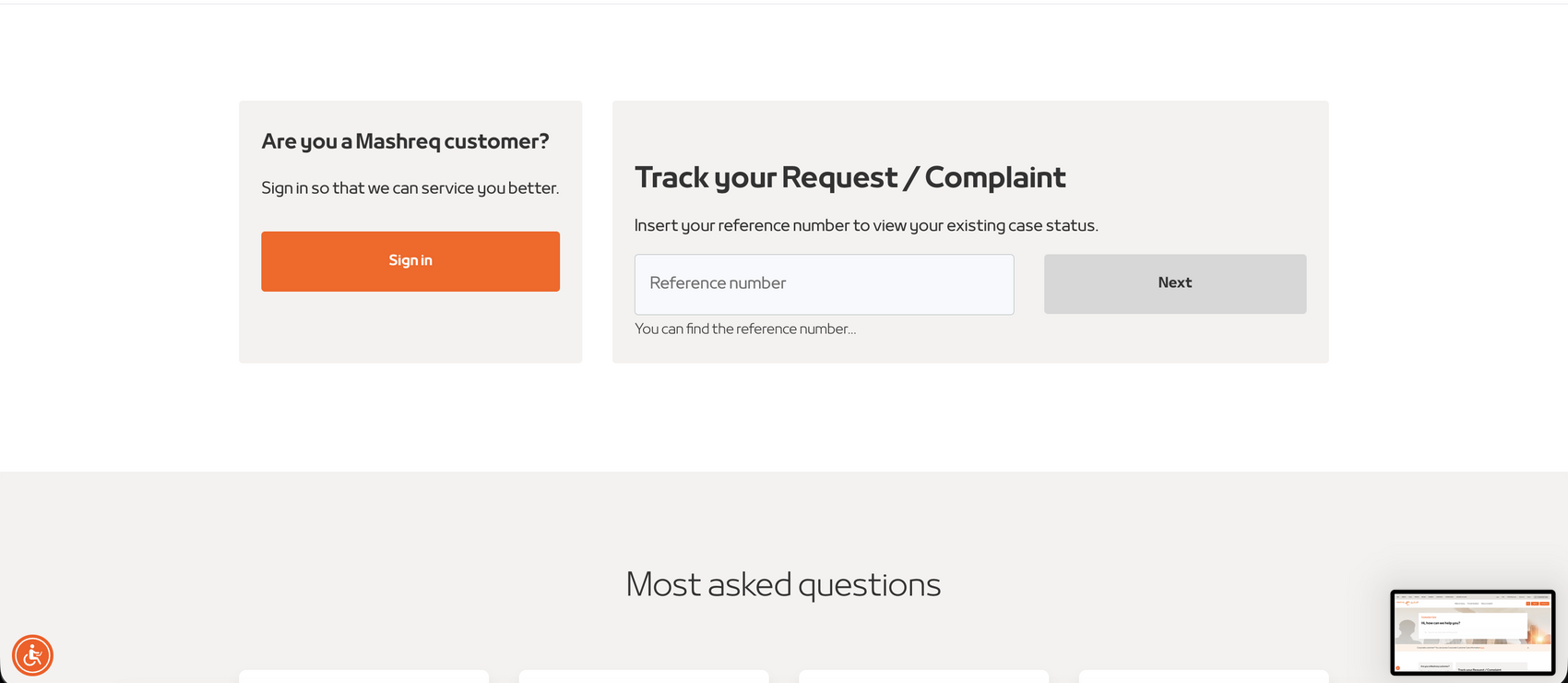
The Customer Care page I designed and shipped at Mashreq — rebuilt here so you can actually use it.
Faithful recreation · not the live site · view the live page ↗
A customer stranded at the airport, cards failing, couldn't reach the bank. The help existed, it was just buried deep in the site, impossible to find in the moment that mattered. That one complaint triggered a full rethink of customer care across web and mobile.
Reaching customer care took 4+ clicks through menus, an eternity when your card just failed abroad.
Customers were never empowered to solve problems themselves and gain a little independence.
Too little guidance meant people couldn't make the most of resources and services already on offer.
Delays in responding to calls aggravated already-frustrated users, and every detour eroded trust.
I pulled Google Analytics and mailbox volumes to see what customers actually asked, then interviewed users to pressure-test it. Four themes came back.
voices from research
I benchmarked help experiences across banks and best-in-class products, Amazon, Netflix, Patagonia, Spotify, Emirates NBD and more, to borrow the patterns worth keeping.
| Pattern | Amazon | Netflix | Patagonia | Spotify | Banks |
|---|---|---|---|---|---|
| Search bar in help menu | ✓ | ✓ | ✓ | ✓ | · |
| Categories in help pages | ✓ | ✓ | ✓ | ✓ | ✓ |
| Links embedded in answers | ✓ | ✓ | · | ✓ | · |
| Video on the homepage | · | ✓ | ✓ | · | · |
| Expandable answers / FAQ | ✓ | ✓ | ✓ | ✓ | ✓ |
Search in the help menu, categorised help, and links embedded in answers, the three takeaways the interviews and the benchmark both pointed to.
Novelty wasn't the job. People in distress want the pattern they already know, working perfectly.
The same goal, get an answer, before and after the redesign. The call centre moves from the only door to the last door.
I broke the experience into three tasks, each mapped to a research theme, then designed the UI for every step.
Lead with search, FAQs and videos so people resolve issues independently, and only route to a human when they truly can't.
Making the call easier would have lowered call volume's symptom while leaving the buried, un-helpful page untouched.
A search box at the very top with predictive suggestions, drawing on frequently-used and protected data, so the right answer appears before you finish typing.
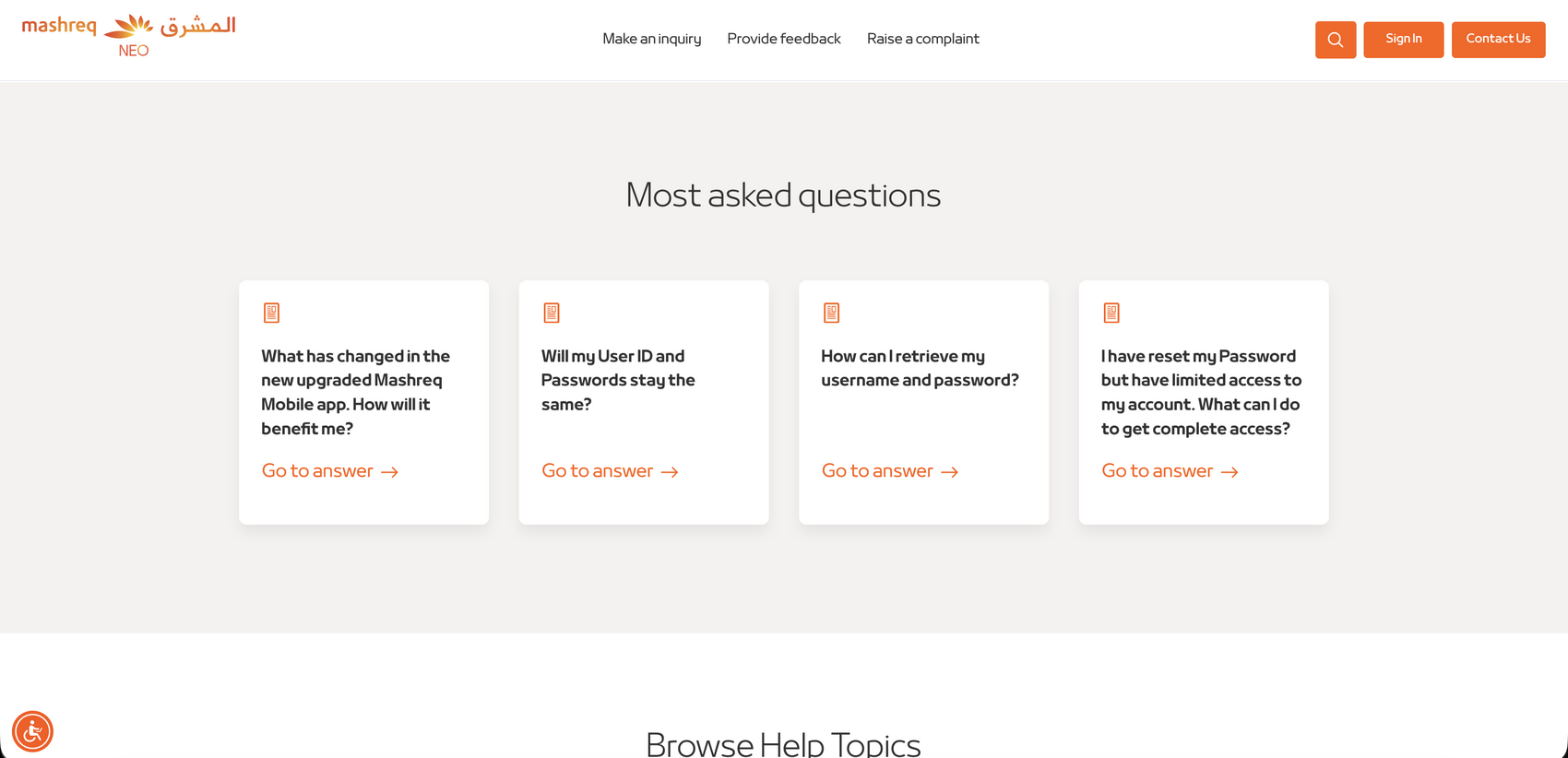
The most-asked questions, identified from the mailbox data, surfaced up front, paired with short how-to videos for people who'd rather watch and learn.
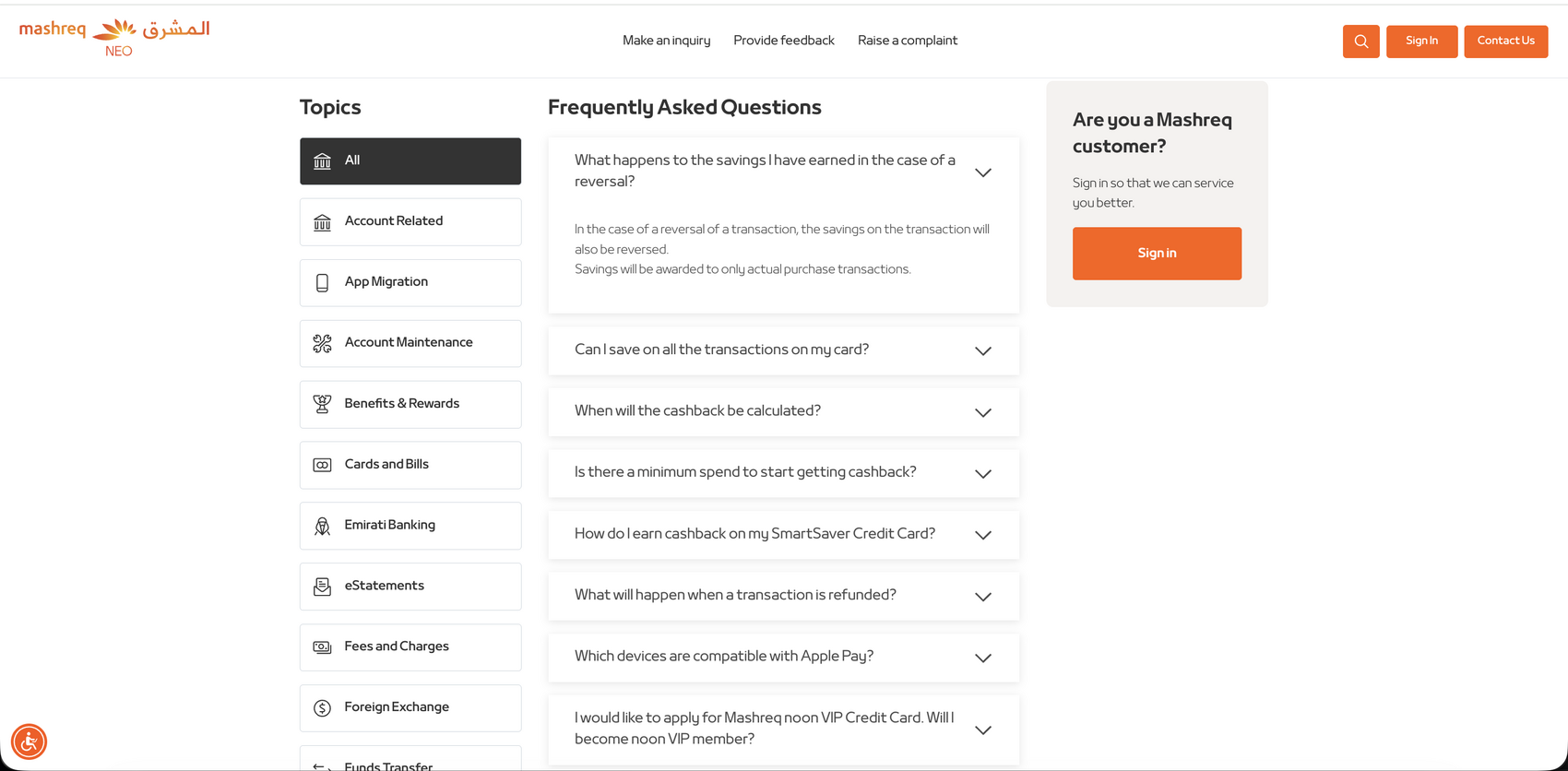
"Browse more topics" opens a full FAQ page organised into clear categories, with collapsible answers and a "Did you find what you needed?" check on every one.
Pick a category, tap a question to expand — then tell us if it helped.
Task 2 & 3 — categorised FAQs with a “did this help?” loop on every answer.
Faithful recreation · not the live site · view the live page ↗
I crafted the journey so every rung gives the customer a chance to solve it themselves. A human call sits at the very bottom, where it belongs.
self-service first, escalation last
Fewer support-related phone calls in the first quarter after launch, more users resolved issues on their own.
Key complaint and support options, once buried, brought to the surface.
Less design-to-development time by building the component library alongside.
Responsive, mobile-first enhancements let users resolve issues on the go.
Add live chat, deliberately. Users asked for it, and the data backs it. Next I'd design chat as the bridge between self-serve and a call, with clear handoff so context never gets repeated.
Instrument the "Did this help?" loop. The yes/no feedback is a goldmine, I'd wire it to continuously re-rank FAQs and flag the answers that quietly fail people.
Personalise the predictions. The search already uses protected data; the obvious next step is tailoring the very first suggestions to the customer's recent activity.
By building the components alongside the design instead of after it, engineering had production-ready pieces from day one, which is where that 42% cut in design-to-development time came from, and what kept the experience consistent as it scaled across web and mobile.
The components shipped with accessibility built in — semantic structure, keyboard-reachable controls and AA-contrast color tokens — so the experience stayed usable for everyone as it scaled.